
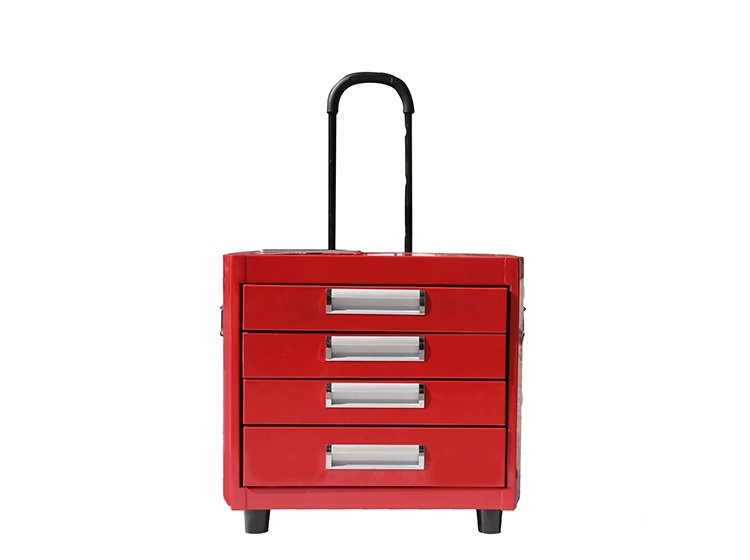
Intelligent toolboxes are smart solutions developed for modern industrial and maintenance scenarios to address pain points such as low tool management efficiency and easy loss. Their core is the integration of RFID (Radio Frequency Identification) technology, IoT communication, and intelligent algorithms to achieve automated inventory, location, and status monitoring of tools. Compared to traditional toolboxes, intelligent toolboxes upgrade tool management from "manual recording" to "data-driven" management, making them particularly suitable for scenarios requiring high-frequency tool use and high tool integrity requirements, such as aircraft maintenance, power line inspection, and laboratory management.
Taking a typical RFID intelligent toolbox as an example, its technical architecture revolves around three stages: "identification, management, and interaction." In the identification stage, the toolbox incorporates a domestically packaged RFID reader/writer (using an imported R2000 chip), supporting simultaneous reading of 100+ tool tags with a reading rate of only 3-5 seconds, enabling rapid inventory even when tools are densely packed. To avoid misreading, the toolbox shell is made of carbon steel with a powder-coated finish, combined with a 20-30cm shielding distance design, effectively isolating external signal interference and ensuring reading accuracy. In terms of management, the toolbox is equipped with a 5-inch capacitive screen and a hardware combination of 1GB RAM + 8GB storage, supporting one-key operation. Users can view tool availability, usage records, and other data directly on the screen. For in-depth analysis, data can be uploaded to the management system via Wi-Fi or 4G communication to generate reports on tool usage frequency and wear trends, providing a basis for procurement decisions. In terms of interaction, each drawer of the toolbox has a maximum load capacity of 5KG and can hold a 10-piece tool set. The pull-rod design facilitates movement; while the manual door opening speed is not automatic, it reduces the risk of mechanical failure and is more suitable for long-term use in industrial environments.
RFID Smart Toolbox, Pull-Rod Design, Portable Mobile Smart Tool Management System
From an industry trend perspective, the widespread adoption of smart toolboxes aligns closely with the "device interconnection" concept in Industry 4.0. Its advantages are not only reflected in efficiency improvements—for example, after an aviation maintenance company introduced it, tool inventory time was reduced from 30 minutes to 2 minutes, and the loss rate decreased by 90%; but also in the mining of data value: by recording tool usage time and frequency, tool procurement plans can be optimized to avoid overstocking or shortages; and secondary development functions (such as supporting customized management software interfaces) further expand application scenarios, such as connecting with enterprise ERP and MES systems to achieve full lifecycle management of tools. With the maturity of IoT technology, smart toolkits are evolving from "single management tools" to "industrial data entry points," becoming an indispensable foundational link in the intelligent manufacturing system.
Validate your login